But, I Have Nothing to Hide
Privacy · Government & Public Sector · Standards & Compliance
“I have nothing to hide” sounds innocent. In reality, it is one of the most dangerous myths in a digital society.
As Edward Snowden put it, saying you do not care about privacy because you have nothing to hide is like saying you do not care about free speech because you have nothing to say.
Privacy is not about guilt. Privacy is about power, context and what can be done to you personally, your employees and your company when information is misused or when the political wind changes.
1. Privacy is about power and context, not secrets
Most of your data is not “secret” in the classical sense. It is simply none of anyone’s business.
Health status. Fertility and menstruation data. GPS traces. Late night messages to a friend. Political donations. Visits to a therapist. Salary negotiations. Internal Slack logs.
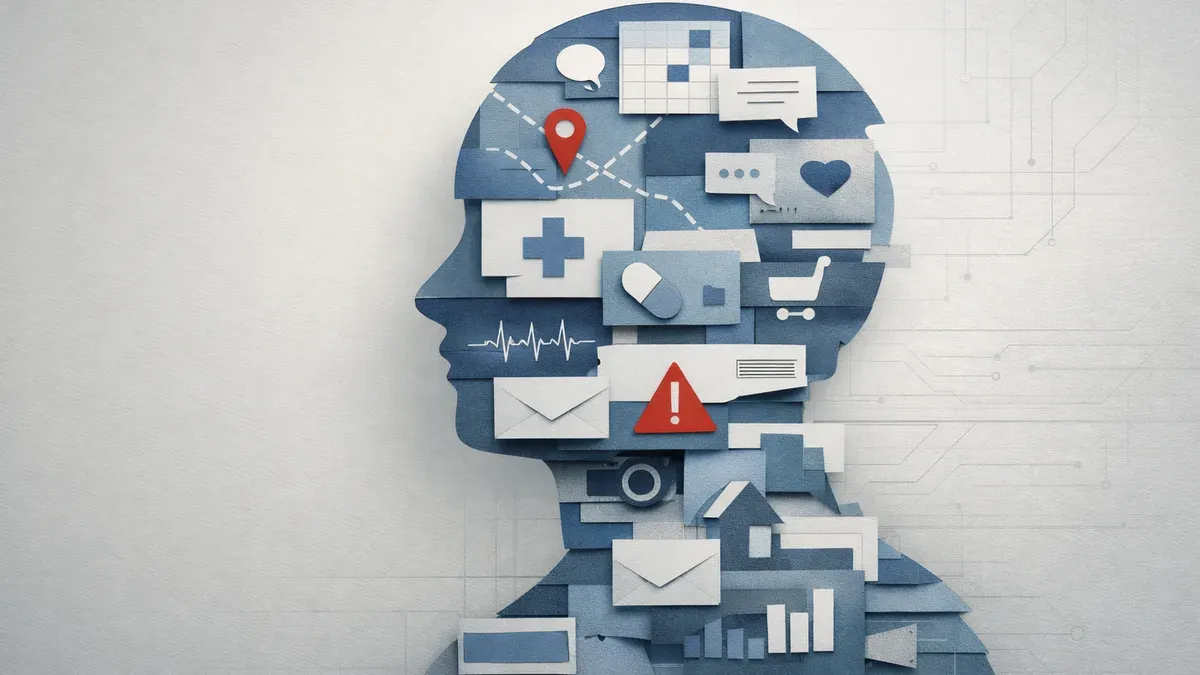
Each element, in isolation, looks relatively harmless. Together, under the control of governments, tech platforms or hostile actors, they become a map of your life and of your organisation.
Context changes. Laws change. Regimes change. Business partners change.
What feels safe today can become risky tomorrow.
2. Ordinary data, extraordinary risk
Reproductive health data
Period tracking and fertility apps collect some of the most intimate data possible: cycles, pregnancies, sexual activity, mood and mental health signals. Studies show that this data can be used to infer pregnancies and abortions.
In the United States, after Roe v. Wade was overturned, many women started deleting period apps because they feared that missed periods, followed by sudden “resets”, could be used as circumstantial evidence in states where abortion is criminalised.
That fear is not theoretical. A case in Nebraska saw police obtain private Facebook messages between a mother and her daughter and use them to prosecute an at-home abortion.
More recently, a US jury found that Meta and Google illegally collected menstrual health data from the Flo period tracker, and Google and Flo agreed to pay millions to settle claims about sharing sensitive reproductive data with third parties, out of court.
None of these women were “terrorists”. They were ordinary users whose intimate data flowed into opaque ad-tech and law enforcement ecosystems.
Movement and association
Automatic license plate readers (ALPRs) and similar tools now create mass archives of where citizens travel, sleep, shop and congregate through their car movements. Civil liberties groups have documented how these systems log movements of everyone, not just specific suspects, often with weak retention limits and broad data sharing.
For a regular person, this means:
- A divorce lawyer can subpoena years of location history.
- A hostile insider in law enforcement can quietly track an ex-partner.
- A foreign actor who hacks a vendor can map the routines of executives, judges, journalists or regulators.
Again, it’s not about hiding crimes. It is about refusing to live inside a permanent tracking system. All the accumulated data will be breached eventually. It’s not if, but when.
Behavioural and political profiling
The Cambridge Analytica scandal showed how “likes” and quiz data from tens of millions of Facebook users were turned into psychographic voter profiles and used in major political campaigns.
Most of these people never knowingly “shared” their political views. Yet their digital exhaust became raw material for psychological targeting. In a different context this data is gold for psychological warfare.
If your employees, customers and citizens are profiled at this scale, you still have elections, but you no longer have a level (information) playing field. You have behavioural engineering. Is this compatible with the idea of freedom or democracy?
3. Omniscient states and the erosion of democracy
Democracy does not die only through coups. It also withers when people quietly self-censor because they feel watched.
Research on Wikipedia traffic, for example, shows a measurable drop in visits to sensitive topics after news broke about large scale NSA surveillance. People did not want to leave a trace on pages about terrorism or extremism, even though reading such pages is perfectly legal.
This “chilling effect” applies to:
- Joining political movements
- Contacting journalists or NGOs
- Reporting corruption inside organisations
If every association, donation and message “might be misinterpreted later”, fewer people take the risk. Formally, you still have rights. In practice, many stop using them.
A striking example came from China’s Covid health code system. In 2022, depositors trying to travel to protest frozen bank accounts in Henan reported that their Covid apps suddenly turned red, blocking their movement and effectively preventing the demonstration.
A tool built for health became a lever of control. No law had to be debated in parliament. The infrastructure was already there.
4. Switzerland: a long memory of surveillance, and new legal stakes
For Swiss readers, this is not abstract theory.
In 1989, the Fichenaffäre secret files scandal revealed that federal authorities had kept around 900,000 secret police dossiers on citizens, organisations and firms, often for ordinary political activity. The shock was profound and led to institutional reforms and a long-lasting mistrust of unchecked state surveillance.
Today, Switzerland positions itself as a trusted data jurisdiction. That trust is not automatic. It is earned through law and practice.
The revised Federal Act on Data Protection (FADP), in force since September 2023, significantly tightens obligations on businesses: transparency, data minimisation, privacy by design, records of processing, impact assessments for high-risk processing, and stronger rights for individuals.
For Swiss and North American business leaders, this is not just compliance. It is strategy:
- Your customer data and your trade secrets are targets.
- Your employees’ data can turn into reputational and legal risk if mishandled.
- Your brand promise increasingly includes “we do not abuse what we know about you”.
A country that has already lived through a secret files scandal cannot afford complacency in the age of cloud, AI and global data flows.
5. Our uncomfortable truth: criminals also use privacy
There is a difficult point that needs to be acknowledged clearly.
Yes, criminals, predators and terrorists will also use encrypted messaging, privacy preserving cryptocurrencies and other privacy by design tools. Just like they drive on public roads, use cash and talk to lawyers.
We accept many protections that also benefit the guilty because they are essential to protect the innocent: the right to silence, legal privilege, the presumption of innocence.
Privacy technologies sit in the same family. They:
- Limit the damage from cyber breaches by reducing the volume and sensitivity of stored data.
- Make certain forms of abuse technically impossible instead of merely illegal on paper (law has never protected against data breach).
- Protect vulnerable people, dissidents, journalists, and whistleblowers from retaliation.
The answer is not a fantasy of an “omniscient but benevolent” state. The answer is targeted surveillance with due process, strong oversight, and clear legal thresholds, instead of permanent mass data collection on everyone.
6. Why this matters for your business
For a business owner or executive, “nothing to hide” is not a serious position.
You have a duty to:
- Design products and services that collect only what is needed and protect it by default.
- Recognise data protection as part of your licence to operate, not a footnote in legal terms.
- Protect employee and customer data against misuse by third parties, including by future governments.
Privacy is not a niche concern of activists. It is part of the risk management and governance toolkit that keeps your organisation resilient under political, legal and technological uncertainty.
You may feel you have nothing to hide today, but your and your company’s data as well as all collected third-party data, will outlive every government and every executive in place today.
The real question is not “Do you have anything to hide”. The real question is “Who do you trust with an almost perfect map of your life and your business, for decades to come”.
References and further reading
Reproductive data and abortion enforcement
- Global News, “Here’s what you need to know about online privacy in a post-Roe world”
- Cao J. et al., “I Deleted It After the Overturn of Roe v. Wade: Understanding Women’s Privacy Concerns Toward Period Tracking Apps in the Post Roe v. Wade Era”
- Reuters, “Google, Flo Health to pay 56 million in period-tracking app privacy case”
- The Verge, “Meta illegally collected Flo users’ menstrual data, jury rules”
Mass surveillance, ALPR and chilling effects
- Brennan Center for Justice, “Automatic License Plate Readers: Legal Status and Policy Recommendations”
- ACLU, “Chilling Effects of License Plate Location Tracking”
- ACLU, “The High Definition, Artificially Intelligent, All Seeing Future of Big Data Policing”
- CT Insider, “ACLU demands Connecticut halt license plate reader use over privacy concerns”
- Penney J., “Online Surveillance and Wikipedia Use: Chilling Effects”
Cambridge Analytica and profiling
- Amnesty International, “The Great Hack: Cambridge Analytica is just the tip of the iceberg”
- Hu M., “Cambridge Analytica’s black box”
- Reuters, “Facebook must face DC attorney general’s lawsuit tied to Cambridge Analytica scandal”
- News.com.au, “Meta agrees to huge payout for Aussies”
China health codes and protests
- Reuters, “China bank protest stopped by health codes turning red, depositors say”
- Wikipedia, “2022 Henan banks protests”
- Guardian, “Protest in China over frozen bank accounts ends in violence”
Swiss context and data protection law
- Wikipedia, “Secret files scandal”
- Swiss Federal Archives, “Political police and state security in Switzerland”
- Swissinfo, “Secret files scandal again looms large”
- KMU.admin.ch, “New Federal Act on Data Protection (nFADP)”
- DLA Piper, “Data protection laws of the world: Switzerland”
- JENTIS, “Switzerland’s new Data Protection Law: What is the FADP?”
Conceptual background